Diese Seite gibt es auch auf Deutsch.

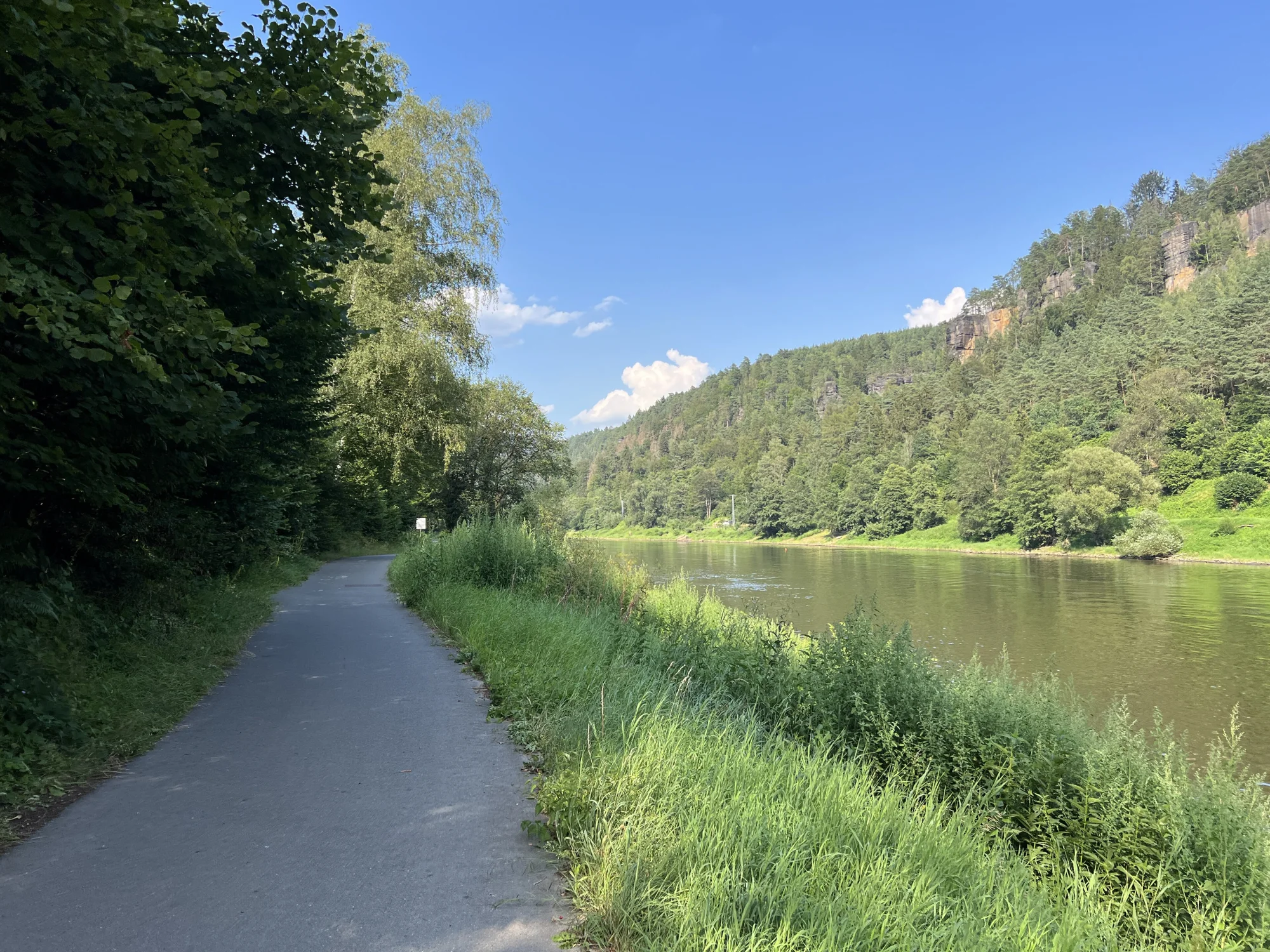
A narrow asphalt cycle path between trees and tall grass on the bank of the Elbe, opposite wooded slopes with sandstone cliffs under a blue sky

Your next bike trip?

Elbe and Vltava: Dresden – Prague

232 km in four riding days up the Elbe, through the Elbe Sandstone Mountains and the Central Bohemian Uplands, past Mělník and up the Vltava to Prague.

  • Touring or trekking bikeBike
  • Germany, CzechiaCountries

Photo: Lukas Beck, CC BY 4.0, cropped, with text

  • 232 kmDistance
  • 930 mClimbing
  • 4Days
  • 58 kmper riding day
  • 92 %Paved
  • May, June, SeptemberBest months

The route

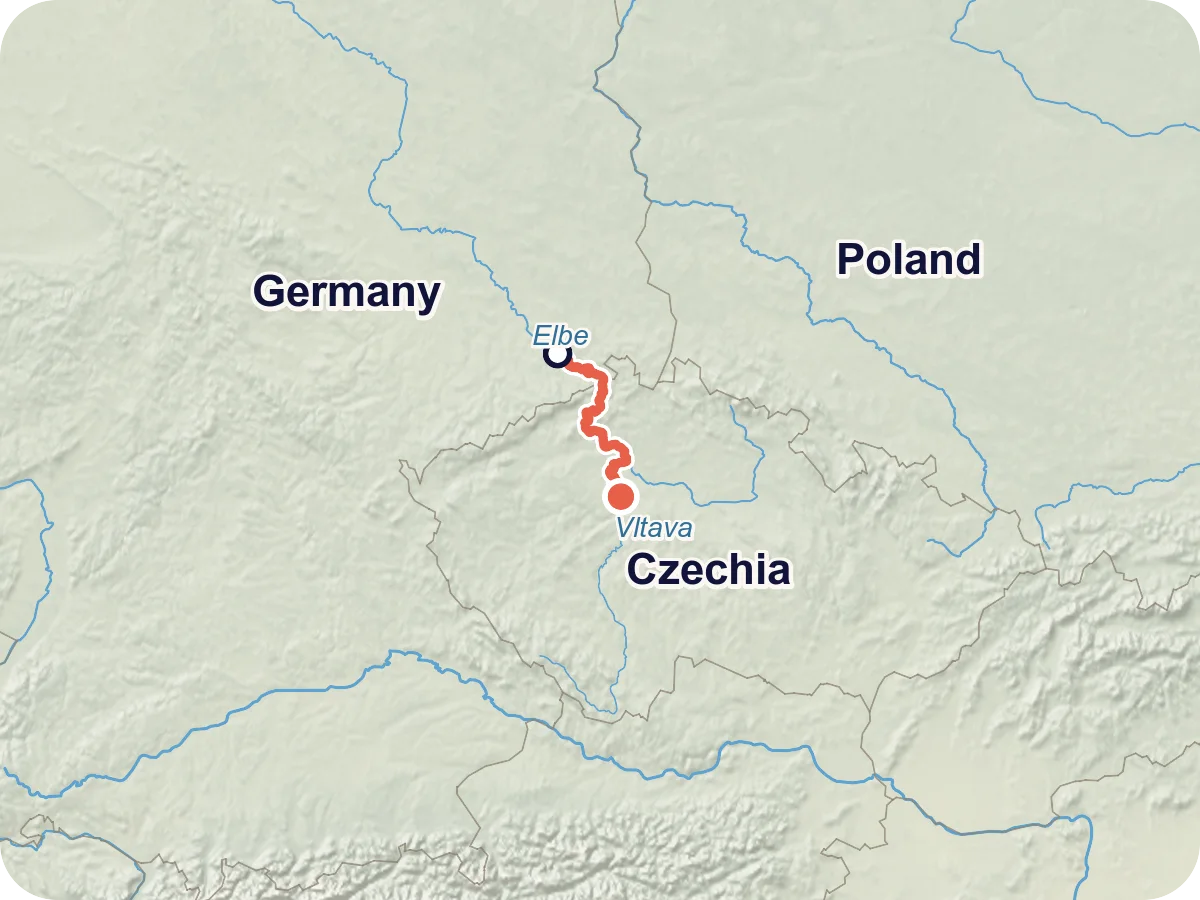
Map of the route from Dresden via Pirna, Bad Schandau, Děčín, Ústí nad Labem, Litoměřice and Mělník to Prague
Locator map: the Dresden – Prague route along the Elbe and Vltava through Germany and Czechia.
  • Asphalt 214 km
  • Paved 12 km
  • Compacted gravel 5 km
  • Loose surface 1 km
  • Cobblestones 0.2 km

Map © OpenStreetMap contributors, OpenFreeMap, OpenMapTiles. Relief: Mapterhorn. Locator map: Natural Earth

Dresden is where the Elbe Cycle Route to Hamburg begins. This trip goes the other way, up the Elbe into the hills. From the old town you ride along the left bank past Pillnitz and Pirna into the Elbe Sandstone Mountains, beneath the Bastei, across the border at Schöna and through the Elbe Canyon to Děčín. On day two the Elbe squeezes through the Central Bohemian Uplands, past Střekov Castle in Ústí nad Labem and the vineyards of the Porta Bohemica to Litoměřice. Day three crosses the flat Elbe valley to Mělník, where the Vltava flows into the Elbe. On the last day you ride up the Vltava, over a hill before Roztoky and across the river on a small ferry, then on the riverside cycle path right into Prague's old town.

The route follows the Elbe Cycle Route, called Labská stezka in Czechia, and on the Vltava the cycle path to Prague, for long stretches on EuroVelo 7. The cycle route itself recommends riding upstream: the wind blows most often from the northwest, so with a little luck you have it at your back. The border lies within the Schengen area, and in Czechia you pay in koruna.

Length and ascent come from the route calculation in Pedalglobe: 232.3 km and 930 m of climbing. The cycle route gives about 220 km for Dresden – Prague, measured between the railway stations. Our route is longer because it runs from old town to old town and goes over the hill to Roztoky before Prague. The line follows the ways as the map (OpenStreetMap) records them. There is no guarantee that the way is passable. Read the route notes before you plan, they list closures and ferries with the date checked.

Plan it yourself: This trip and everything here: planned in Pedalglobe in a few minutes, with elevation profile, climate for every day and what applies at each border.

Pedalglobe on the App Store

Stage by stage

  • Day 1: Dresden – Děčín

    72 km · 111 m of climbing

    148 m
    • Asphalt 69 km
    • Paved 3 km
    • Compacted gravel 0.3 km
    • Cobblestones 0.1 km

    The longest day and perhaps the most beautiful. From the old town you ride out of the city on the left bank, past the Blue Wonder and opposite Pillnitz Palace to Heidenau and Pirna. Then Saxon Switzerland begins: Stadt Wehlen, Kurort Rathen below the Bastei, Königstein with its fortress. Between Rathen and Königstein the path is closed until 30 November 2026, and the detour means pushing. From Königstein you stay on the cycle path on the left bank, past Bad Schandau station and through Krippen. Via Krippen and Schöna you reach the border and ride through the Elbe Canyon via Dolní Žleb to Děčín. 72 km and 111 m of climbing.

  • Day 2: Děčín – Litoměřice

    54 km · 217 m of climbing

    183 m
    • Asphalt 46 km
    • Paved 5 km
    • Compacted gravel 3 km
    • Loose surface 0.2 km

    On the right bank through the Central Bohemian Uplands. Via Velké Březno and its palace you reach Ústí nad Labem-Střekov, where Střekov Castle stands above the lock. At the lock you push up stairs, and under the Beneš Bridge the path is closed and diverted until the end of 2026. CzechTourism mentions more car traffic between Svádov and Ústí. After Ústí the Elbe winds through the Porta Bohemica, past the vineyards of Velké Žernoseky, where according to CzechTourism the track is full of potholes. 54 km and 217 m of climbing, highest point 182 m.

  • Day 3: Litoměřice – Mělník

    45 km · 211 m of climbing

    222 m
    • Asphalt 42 km
    • Paved 2 km
    • Compacted gravel 0.6 km
    • Loose surface 0.3 km
    • Cobblestones 0.1 km

    A quiet day through the flat Elbe valley. After just under 9 km the small ferry takes you from Nučnice to Nučničky, it only runs from April to October and not every day. If it is not running, take the way via Terezín (see variants). On the left bank you continue to Roudnice nad Labem with its castle and on to Mělník. According to the map 12 of the 45 km are on ordinary roads. At the end you climb up into the old town of Mělník at 222 m. 211 m of climbing.

  • Day 4: Mělník – Prague

    61 km · 389 m of climbing

    306 m
    • Asphalt 56 km
    • Paved 2 km
    • Compacted gravel 2 km
    • Loose surface 0.7 km

    Down to the confluence and along the Vltava: past the Hořín lock, the canal and the palace and park of Veltrusy, then via Nelahozeves and its castle and Kralupy nad Vltavou to Libčice nad Vltavou. Here the route leaves the river and climbs to 306 m, the highest point of the trip, a good 120 m above the water. Then you roll back down to the Vltava and to Roztoky, where the small ferry crosses to Klecánky, on weekdays with a break between 9 am and 1 pm. On the right bank you follow the asphalt cycle path past Troja Palace into Prague's old town. 61 km and 389 m of climbing, 26 km of it on ordinary roads.

The ground under your tyres

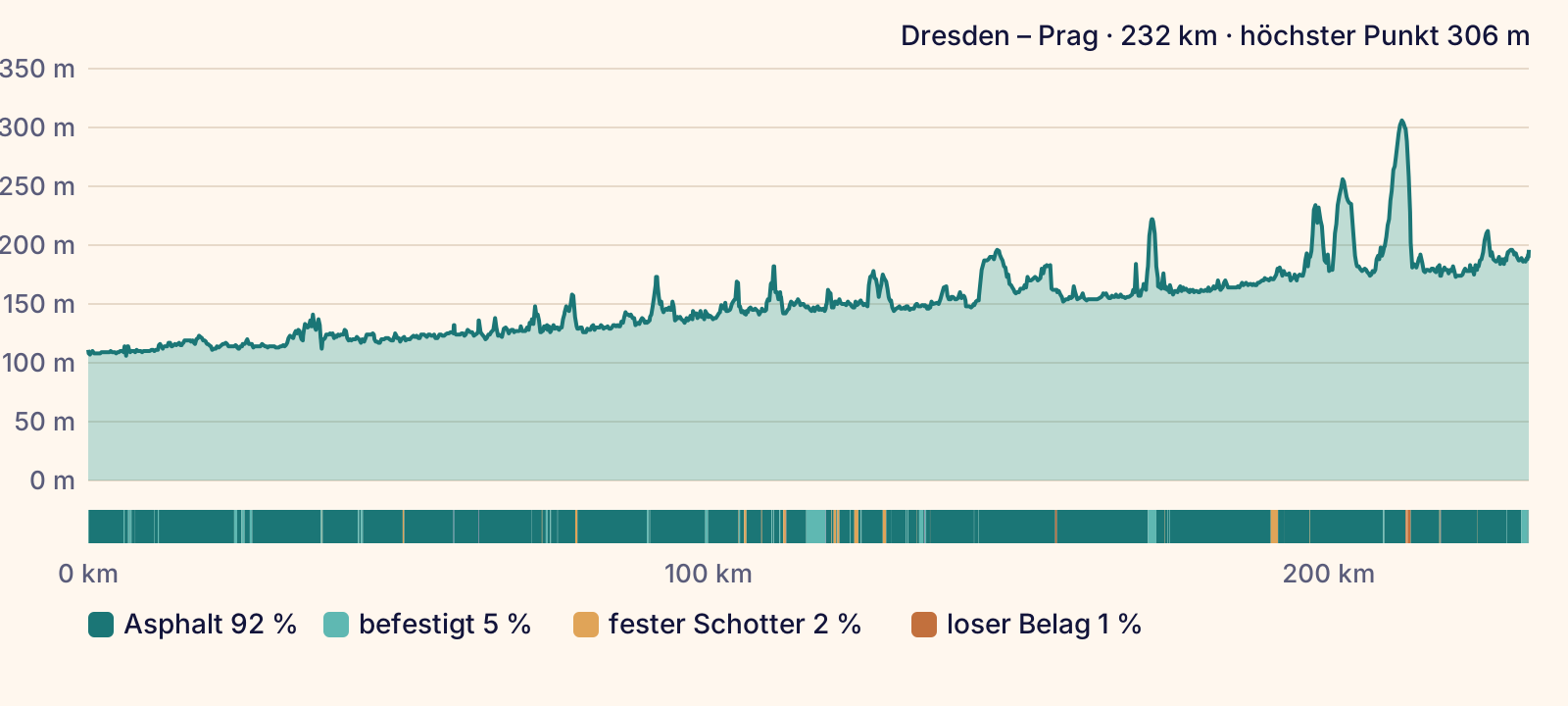
Elevation profile, long and flat along the river from about 110 m in Dresden to just over 200 m at Mělník, with a peak of 306 m before Prague

According to the map you ride 92 % on asphalt and 5 % on other sealed surfaces. A good 6 km have no sealed surface, spread over short stretches, most of them along the Vltava on the last day. According to CzechTourism the Czech part is asphalt almost all the way, with a few poor spots such as the potholed track near Velké Žernoseky.

On traffic: 73 % of the route is on signposted cycle routes. According to the map you ride 37 % on dedicated cycle paths, 24 % on quiet roads, 16 % on tracks and access roads and 22 % on ordinary roads. Only just under 3 km are busy, almost all after Königstein. Ordinary roads cluster on the Vltava on the last day (26 of 61 km) and between Litoměřice and Mělník. CzechTourism mentions more car traffic near Církvice and between Svádov and Ústí nad Labem. In Saxon Switzerland the cycle path is asphalt but not entirely car-free, residents drive on it.

Two ferries are part of the route: on day three between Nučnice and Nučničky, 0.2 km in the profile, and on the last day between Roztoky and Klecánky, 0.1 km. Both are small and do not run around the clock, the times are in the route notes. What the surface actually looks like changes with weather, floods and roadworks.

Difficulty and who it suits

Overall: easy. Mostly asphalt and by the river. The first day is long, and before Prague a climb to 306 m awaits.

  • Distance58 km per riding day, the longest day has 72 km
  • Climbingabout 470 m per 100 km, most of it before Prague and in Saxon Switzerland
  • Surface91 % asphalt according to the map, just under 9 km without a sealed surface
  • Traffic1 % on busy roads, 22 % on ordinary roads, 73 % on signposted cycle routes
  • Self-sufficiencyTowns and villages along the way every day, every day ends at a railway station

The Pedalglobe scale: the same five features and levels 1 to 5 for every trip.

An easy trip with two catches. Four days averaging 58 km, and Pedalglobe calculates 930 m of climbing over 232 km. The cycle path itself is asphalt almost everywhere and follows the river, and the tourist board rates the Pirna – Děčín stretch as easy. Every day ends in a town with a railway station.

The first catch is the first day: 72 km from Dresden to Děčín, on the long side by the cycle route's guide values (60 to 70 km a day for experienced riders). If you prefer it calmer, stay in Kurort Rathen, Königstein or Bad Schandau and plan five days. The second catch is the last day: after Libčice nad Vltavou the route climbs to about 306 m, the highest point of the trip and a good 120 m above the river, and along the Vltava you ride 26 of 61 km on ordinary roads.

Who it suits

  • anyone who has ridden Dresden – Hamburg and wants to know the Elbe upstream too
  • anyone looking for a first bike trip across a border, with towns at the end of each day
  • anyone who loves rocks and river scenery: Elbe Sandstone Mountains, Elbe Canyon, Porta Bohemica
  • families with shorter days, with a plan for the climb before Prague or the train from Mělník

When to go

Best months: May, June, September

×Jan×Feb×Mar!Apr✓May✓Jun!Jul!Aug✓Sep!Oct×Nov×Dec3°5°10°17°21°24°27°27°21°14°8°4°-3°-3°0°3°8°11°13°13°9°5°1°-2°
  • ✓good
  • !marginal
  • ×poor
  • Day °C
  • Night °C
  • Precipitation (mm)

The best time to set off is May, June or September. Daytime highs in the Elbe valley then average 21 to 24 degrees, nights 8 to 11 degrees. July and August are the warmest months, with a mean of 27 degrees by day. April and October work too, with 14 to 17 degrees by day and fresh nights.

Bohemia is much drier than Dresden. Prague gets about 445 mm of rain a year, Dresden-Klotzsche about 636 mm. Most of it falls from May to August, often as showers or thunderstorms. September is notably dry in Bohemia, about 34 mm in Prague.

The table shows Doksany in the Elbe valley between Roudnice nad Labem and Terezín, which you pass on day three. Highs, lows and precipitation are long-term means for 1991 to 2020, calculated by us from the monthly values of the Czech weather service ČHMÚ and rounded to whole degrees and millimetres. They are averages over many years and say nothing about a single day.

All values as a table

Climate by month (long-term average)

MonthDayNightPrecipitationFor cycling
January3 °C-3 °C24 mmpoor
February5 °C-3 °C19 mmpoor
March10 °C0 °C28 mmpoor
April17 °C3 °C23 mmmarginal
May21 °C8 °C54 mmgood
June24 °C11 °C66 mmgood
July27 °C13 °C71 mmmarginal
August27 °C13 °C66 mmmarginal
September21 °C9 °C41 mmgood
October14 °C5 °C33 mmmarginal
November8 °C1 °C29 mmpoor
December4 °C-2 °C29 mmpoor
  • Heat in the valley: in July and August the mean daytime high in Doksany is 27 degrees, in Prague 26 degrees. On the flat third day through the Elbe valley and on the climb before Prague, set off early in the day.
  • Cool nights in the valley: nights in the Elbe valley at Doksany are cooler than in Prague, a mean of 8 instead of 10 degrees in May and 9 instead of 11 in September. Worth knowing if you camp.
  • Wind: according to the cycle route it blows most often from the northwest. You ride south and southeast, so you often have it behind you. We did not read any measurements of its strength.
  • Floods: the path runs close to the river. According to the German Foreign Office, Czechia occasionally sees flooding in spring and summer, after snowmelt or heavy rain. Riverside paths may then be closed and ferries may not run. No official body names a fixed water level for closures.
Month by month

January

Winter, not cycling season. In the Elbe valley a mean of 3 degrees by day and -3 at night.

February

Still winter, 5 degrees by day, frost at night. The driest month.

March

First mild days at 10 degrees, nights around freezing.

April

17 degrees by day, 3 degrees at night. Little rain, but the small ferries do not run every day yet.

May

Best time. 21 degrees by day, 8 at night, the valley turns green.

June

Best time. Long days at 24 degrees, the ferries run daily.

July

Warmest and wettest, 27 degrees by day, 71 mm mostly as thunderstorms. Start early in the day.

August

As warm as July, 27 degrees by day, 13 at night. Busy along the river.

September

Best time. 21 degrees by day, 9 at night, and in Bohemia the driest month of the summer half.

October

Still 14 degrees by day, 5 at night. The small ferry on day three only runs at weekends.

November

Cool and short, 8 degrees by day. The season is over.

December

Winter, not cycling season. 4 degrees by day, frost at night.

Variants

Before or after: the Elbe to Hamburg · 578 km

Dresden is the start of the trip idea Elbe Cycle Route Dresden – Hamburg, 578 km. If you start in Hamburg and ride up the Elbe, you can add this trip and reach Prague in about two weeks.

Without the ferry, via Terezín · 23 km

If the small ferry at Nučnice is not running, cross the bridge in Litoměřice to the left bank and follow cycle route 2A via Terezín and Hrobce to Roudnice nad Labem. According to the cycle route's handbook that is 23 km instead of about 20 km. In Terezín the memorial commemorates the Theresienstadt ghetto and the prison in the Small Fortress.

Signposted Vltava route via Máslovice

The signposted route crosses by ferry from Libčice to Máslovice and then runs via Vodochody and Drasty down to Klecany. The cycle route itself warns of a steep climb and a busy road there. As a way out it suggests the train from Libčice to Řež, from where you ride along the river to Prague. Pedalglobe instead stays on the left bank and takes the ferry at Roztoky.

Just the Elbe Sandstone Mountains · 76 km

The first day alone is a trip in itself: 72 km from Dresden to Děčín, through Saxon Switzerland and the Elbe Canyon. Ride back on the National Park Railway U28 to Bad Schandau and the S-Bahn S1 to Dresden. With a night in Kurort Rathen it becomes a relaxed weekend.

Right bank in Saxon Switzerland

Between Pirna and Kurort Rathen and between Königstein-Halbestadt and Schmilka the cycle path also runs on the right bank. Ferries at Pirna, Stadt Wehlen, Rathen, Königstein and Bad Schandau link the two sides. Between Rathen and Königstein there is only the path on the left bank.

Side trips to the Bastei and Königstein Fortress

At Kurort Rathen a cable ferry crosses into the village, and a footpath leads up to the Bastei Bridge. According to the cycle route you can leave bike and luggage at a bike station on the left bank. The ferry has its own ticket, transport association passes and the Deutschlandticket are not valid there. For Königstein Fortress, leave your bike in town, there is a bike garage with 16 lockers at the ferry.

Getting there and back by train

Getting there

The start is Dresden. You arrive by bike on the Elbe Cycle Route from Hamburg or by train. On Deutsche Bahn long-distance trains your bike always needs a bike ticket with a space reservation. Which trains from your city have bike spaces is shown in the railway's journey planner.

Getting back

From Prague, EuroCity trains run via Ústí nad Labem, Děčín, Bad Schandau and Dresden on to Berlin and Hamburg. According to Czech Railways, a bike reservation is usually mandatory on international long-distance trains, marked in the timetable by a bike symbol in a frame. Sales open 60 days ahead, and Deutsche Bahn's international bike ticket costs from 7.99 euros. Deutsche Bahn's website is contradictory about whether it can be booked online, a travel centre or the phone line works for sure. We did not check how many bike spaces a train has. Book early, spaces are scarce in summer.

Watch out on Mondays: until November 2027 the line between Bad Schandau and Schöna is closed every Monday except public holidays from 9 am to 7 pm. EuroCity trains are then cancelled on that stretch or replaced by buses that, according to the cycle route, often do not take bikes. Travel on another day or outside those hours.

Your bike on the train

In Czechia your bike rides in regional trains marked with a bike symbol as long as there is space. It costs 40 koruna up to 150 km, 60 koruna beyond that, or 99 koruna for a day ticket for the bike. A reservation is free when bought online with a ticket, 35 koruna at the counter and 50 koruna on the train. Tandems are not allowed. In Prague, a public transport ticket lets one bike ride free on Czech Railways trains within the city.

You can shorten the trip in the Elbe Sandstone Mountains: the National Park Railway U28 links Děčín with Bad Schandau, from where the S-Bahn S1 runs via Pirna to Dresden. During the Monday closure the S1 ends at Bad Schandau. Deutsche Bahn long-distance trains do not take tandems, recumbents or large tricycles, but pedelecs up to 25 km/h are fine.

Food and places to sleep

Every day leads through towns and villages. Along the way lie Pirna, Bad Schandau, Ústí nad Labem, Roudnice nad Labem and Kralupy nad Vltavou, and the overnight stops Děčín, Litoměřice, Mělník and Prague are towns. The cycle route calls Děčín the first larger town after the border, with a wide choice. We did not check where shops are missing between the towns.

Places to sleep

Along the route there are hotels, guesthouses, private rooms and campsites in Saxony and in Czechia. In Czechia the label “Cyklisté vítáni” marks bike-friendly accommodation and restaurants. In high season, book the first nights ahead. We did not check the rules on wild camping.

Bike shops and water

At the ferry in Königstein there is a service station with a pump and tools, and in Dolní Žleb a charging point for batteries. The cycle route keeps a list of bike shops for breakdowns along the way.

Along the way

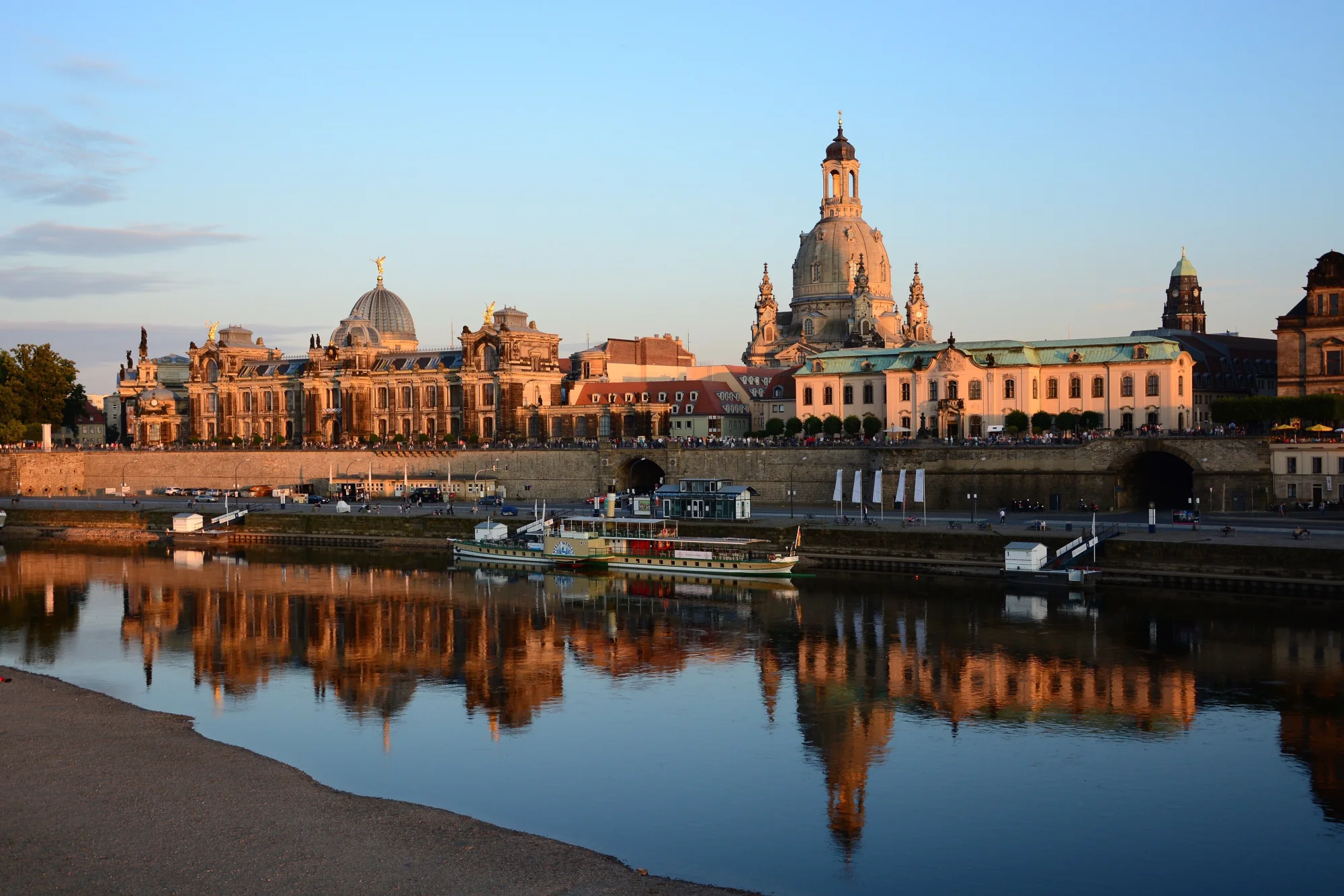
  • The old town on the Elbe in evening light with the dome of the Frauenkirche and the Art Academy, the buildings reflected in the calm water
    Photo: Christoph Freitag from Dresden, Deutschland, CC BY 2.0
    Dresden

    At the start, the Frauenkirche, the Zwinger, the Semperoper and the Royal Palace stand close to the Elbe. From here you ride upstream out of the city, past the Blue Wonder bridge and Pillnitz Palace.

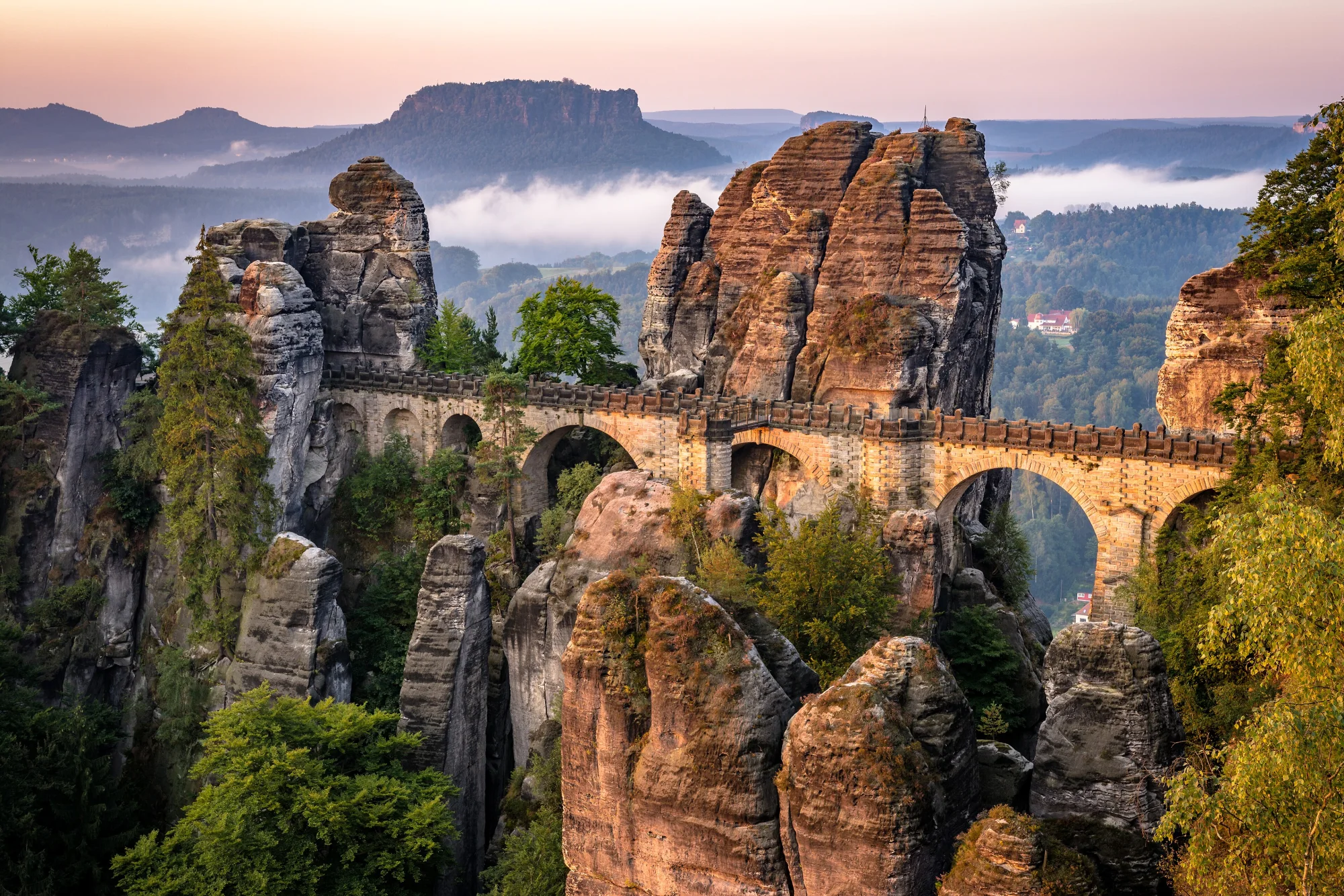
  • A stone arch bridge between tall sandstone towers in morning light, behind it mist in the valley and a table mountain
    Photo: Marco Nürnberger, CC BY 2.0
    Elbe Sandstone Mountains and the Bastei

    After Pirna the rocks close in on the river. At Kurort Rathen the Bastei Bridge spans the rock towers high above you, then come Königstein Fortress and the Elbe Canyon up to the border.

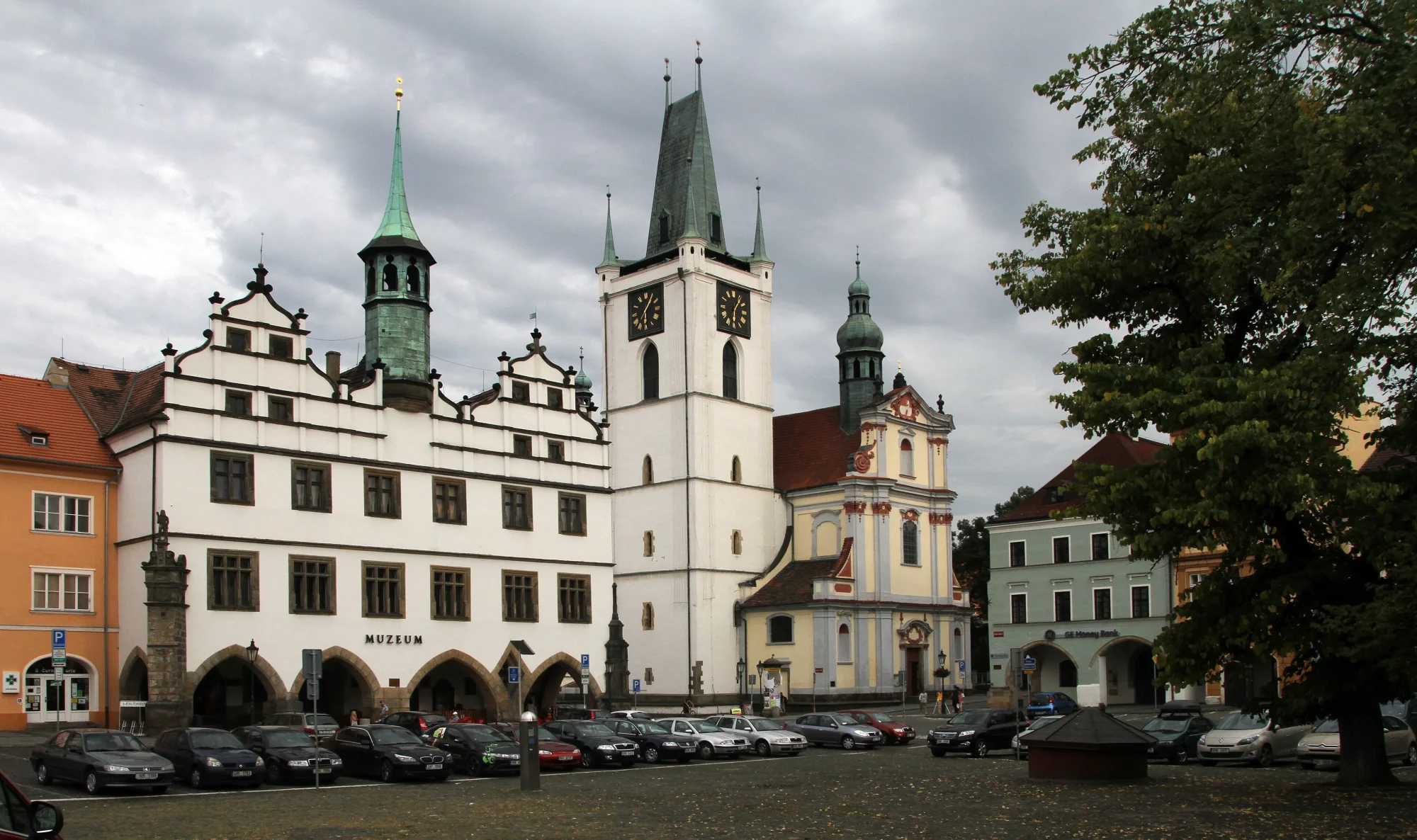
  • The white Renaissance town hall with a green tower and gables on the market square, next to it a bell tower and a yellow baroque church, parked cars in front
    Photo: Gerd Eichmann, CC BY 4.0
    Litoměřice

    On the market square stands the town hall in Saxon Renaissance style, on Cathedral Hill St Stephen's Cathedral. The town lies at the foot of the Central Bohemian Uplands, and before it the Elbe winds through the Porta Bohemica with its vineyards.

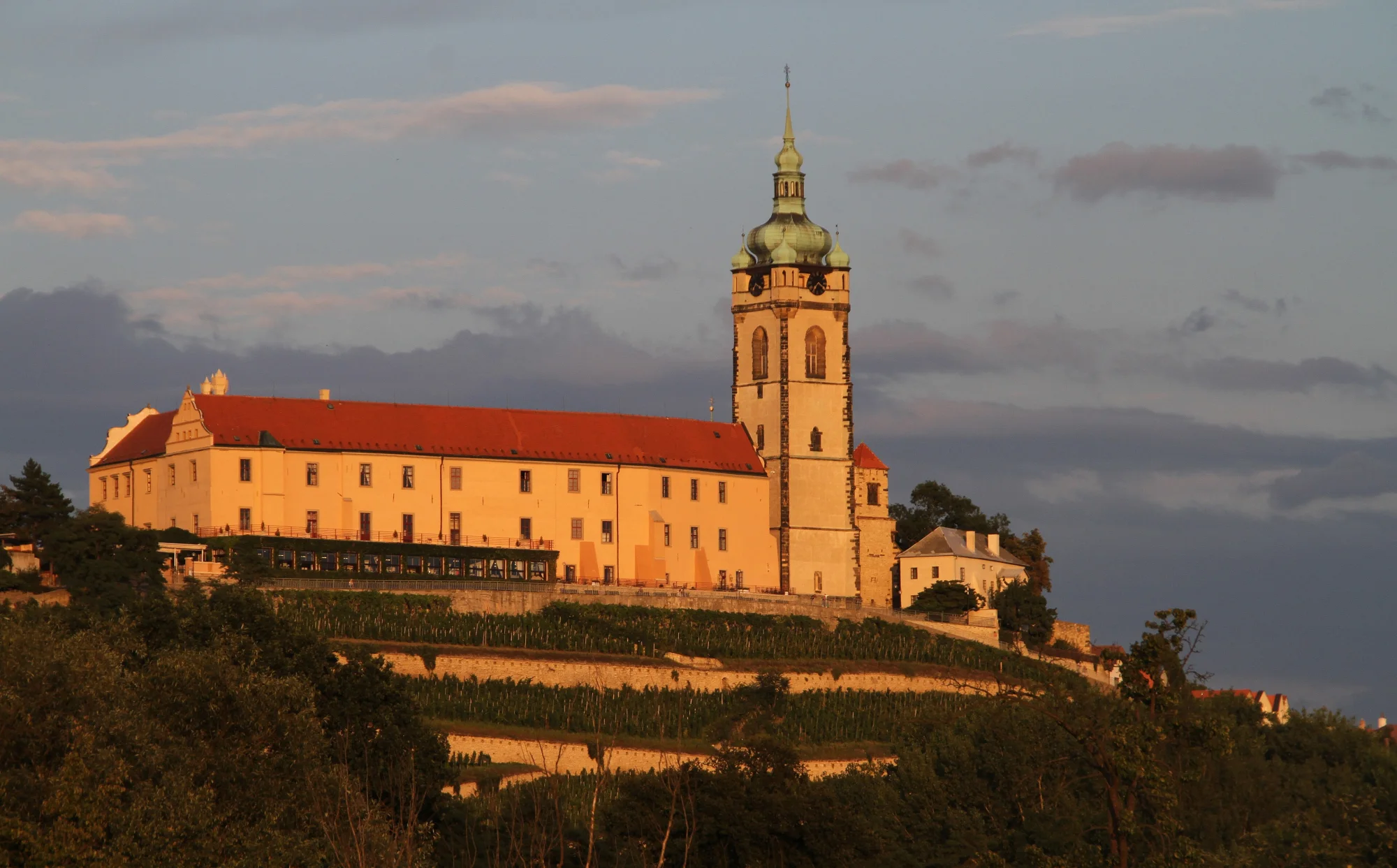
  • The castle with its red roof and the church tower with a green cupola on a hill in evening light, vineyards on the slope below
    Photo: Gerd Eichmann, CC BY 4.0
    Mělník

    The old town sits on a hill above the point where the Vltava flows into the Elbe. From the terrace by the Church of St Peter and Paul you see the confluence, and on the slope below, wine has grown since the 14th century.

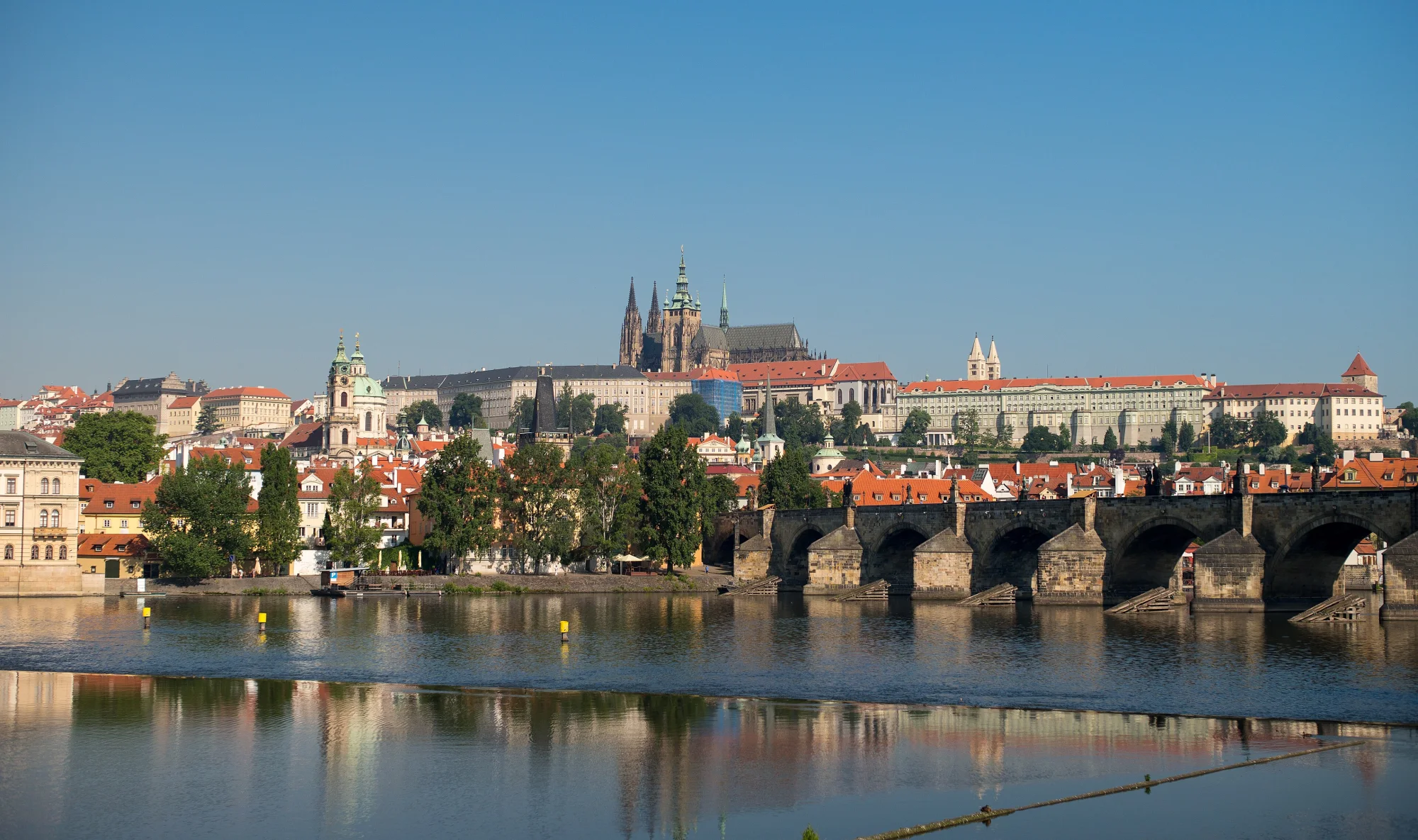
  • Prague Castle with St Vitus Cathedral above the red roofs of the Lesser Town, on the right the stone Charles Bridge over the Vltava
    Photo: R Boed from The Netherlands, CC BY 2.0
    Prague

    On the last day you ride along the Vltava via Troja into the city. Above the river rise Prague Castle with St Vitus Cathedral, said to be the largest coherent castle complex in the world, and the Charles Bridge with its baroque statues of saints.

Across the borders

  • Czechia: No visa for German passports. You enter with a passport, national ID card, the temporary documents or the child's passport, valid at least until the end of the trip. Hotels and hostels ask everyone, including small children, for valid photo ID at check-in. There are currently flexible checks at the German-Czech border, so keep your ID handy on the cycle path at Schöna too. Cyclists under 18 must wear a helmet. You pay in koruna, cards and cash machines are widely used. In exchange offices in tourist areas check the actual rate, the advertised one often only applies in one direction. An exchange of up to 1,000 euros can be reversed within three hours with the receipt. As of 18 November 2026, without guarantee, valid for German passports. (as of 18 November 2026)

No guarantee. What applies at a border can change. Check with the official sources before you set off.

Notes on the route

  • Nučnice – Nučničky ferry on day three: it only runs from April to October, in April on Fridays and weekends, in May Friday to Sunday, from June to August daily from 9 am to 8 pm, in September daily from 1 pm to 6 pm, in October at weekends. The cycle route gives no times for November to March. If it is not running, take the variant via Terezín.
  • Roztoky – Klecánky ferry on the last day: it runs all year, on weekdays from 5.40 to 9 am and from 1 to 8 pm, at weekends and on public holidays from 5.40 am to noon and from 1 to 6.30 pm. On weekdays there is a long break around midday, so plan your arrival in Roztoky around it. As of 18 November 2026.
  • Dresden, Carola Bridge: after the collapsed bridge was demolished, the City of Dresden says the cycle path on the Terrassenufer has been open again since 2 October 2025. In March 2026 it was closed at times at the site during a search for unexploded bombs. We did not check what it looks like there today, and the cycle route reports no closure on 18 November 2026.
  • Riverside path between Klecánky and Prague: in 2025 the cycle path below a rock face was closed for about three months. According to the cycling press it has been open again since, we did not read an official date.
  • Lock at Ústí nad Labem-Střekov: at the Masaryk lock you push your bike up stairs with a ramp or ride about 400 m on a busy road. Allow for it with a trailer or heavy luggage.
  • Floods: at high water, riverside paths may be closed and ferries may not run. The cycle route lists all closures and ferry outages on its own notices page. Read it shortly before you set off.

No guarantee. Roadworks, closures and ferries change, current notes are published by the cycle route's operators.

Ride it yourself

Download route as GPX

Open the GPX file with Pedalglobe and choose “Keep exactly (1:1)”. The route is then under “Tours”. With “Add to Trip …” you turn it into your own trip with days, climate and entry rules for your travel dates.

Plan it yourself: This trip and everything here: planned in Pedalglobe in a few minutes, with elevation profile, climate for every day and what applies at each border.

Pedalglobe on the App Store

You can also find new bike trips and short videos about them on Instagram, TikTok and YouTube.

Sources

Sources and check dates
  1. Elbe Cycle Route, whole route and distances, checked on 18 November 2026
  2. Elbe Cycle Route, arrival in Prague and return to the Elbe Cycle Route, checked on 18 November 2026
  3. Elbe Cycle Route, signposting, checked on 18 November 2026
  4. Elbe Cycle Route, downstream or upstream, checked on 18 November 2026
  5. Elbe Cycle Route, roadworks, detours, ferry outages, checked on 18 November 2026
  6. Elbe Cycle Route, detour between Königstein and Kurort Rathen, checked on 18 November 2026
  7. Elbe Cycle Route, closure under the Beneš Bridge in Ústí nad Labem, checked on 18 November 2026
  8. Elbe Cycle Route, restrictions at the lock in Ústí nad Labem-Střekov, checked on 18 November 2026
  9. Elbe Cycle Route, restrictions on the Dresden – Prague railway, checked on 18 November 2026
  10. Elbe Cycle Route, Nučničky – Nučnice ferry, checked on 18 November 2026
  11. Elbe Cycle Route, Klecánky – Roztoky ferry, checked on 18 November 2026
  12. Elbe Cycle Route, Rathen ferry, checked on 18 November 2026
  13. Elbe Cycle Route, Königstein ferry, checked on 18 November 2026
  14. Elbe Cycle Route, Prague, checked on 18 November 2026
  15. Elbe Cycle Route, Mělník, checked on 18 November 2026
  16. Elbe Cycle Route, Litoměřice, checked on 18 November 2026
  17. Elbe Cycle Route, Děčín, checked on 18 November 2026
  18. Elbe Cycle Route, Dresden, checked on 18 November 2026
  19. Saxon Switzerland Tourist Board, Elbe Cycle Route Pirna – Děčín, checked on 18 November 2026
  20. CzechTourism (Kudy z nudy), from Prague to the Elbe Cycle Route, checked on 18 November 2026
  21. Městem na kole, route A2 in the north of Prague (February 2026), checked on 18 November 2026
  22. City of Dresden, Carola Bridge: demolition, checked on 18 November 2026
  23. City of Dresden, search for unexploded ordnance at the Carola Bridge (March 2026), checked on 18 November 2026
  24. Terezín Memorial, checked on 18 November 2026
  25. ČHMÚ, monthly values for Doksany and Praha-Karlov, means 1991 to 2020 (own calculation), checked on 18 November 2026
  26. German Weather Service, monthly values Dresden-Klotzsche, means 1991 to 2020 (own calculation), checked on 18 November 2026
  27. German Foreign Office, Czechia: travel and safety advice, checked on 18 November 2026
  28. Deutsche Bahn, long-distance bike ticket, checked on 18 November 2026
  29. Czech Railways, taking your bike, checked on 18 November 2026
  30. Czech Railways, trains Prague – Dresden – Berlin – Hamburg (April 2024), checked on 18 November 2026
  31. OpenStreetMap contributors, ways, surfaces and cycle routes along the route (route calculation of 18 November 2026), checked on 18 November 2026

Photos

Checked on 18 November 2026. Maps © OpenStreetMap contributors. Relief: © Mapterhorn and its sources

All trip ideas

More cycling trips

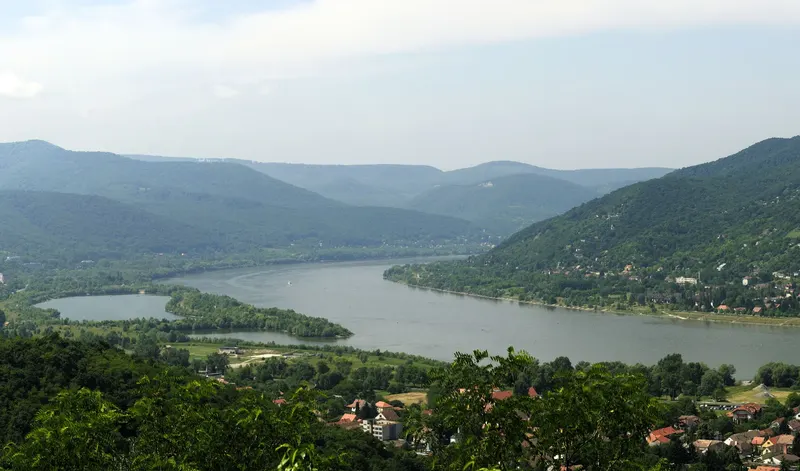
View from a wooded slope over the Danube Bend: the wide river curves between green hills, a side arm on the left, red roofs below

Difficulty: easyNew

Danube Cycle Path: Vienna – Budapest

  • 333 kmDistance
  • 7 daysDays
  • May, June, SeptemberBest months
  • Austria, Slovakia, HungaryCountries

333 km in seven riding days down the Danube, from Vienna via Bratislava and Győr through the Danube Bend to Budapest.

Photo: Philipp Weigell, CC BY 3.0, cropped, with text

See all cycling trips

ContentsPedalglobe on the App Store